

A boiler is only one part of your heating system. Plenty of homes waste energy because of settings, controls or a dirty system rather than a bad boiler. Here are the things that make the most difference, starting with the cheapest.
1. Lower the flow temperature
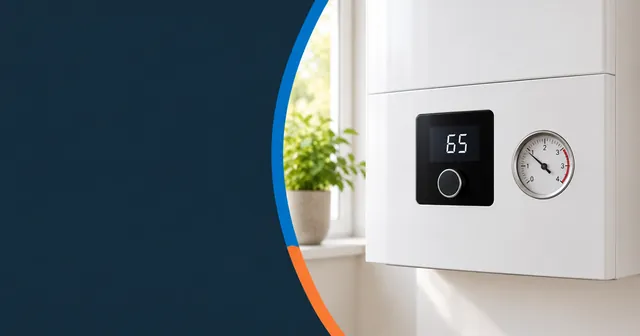
A condensing boiler is at its most efficient when the water returning to it is cool enough, below about 55 degrees, for the flue gases to condense and release extra heat. Many boilers are set to send water out at 70 or 80 degrees, which stops this happening much of the time.
Turning the flow temperature down to around 60 degrees or lower can improve efficiency in many homes. The house will take a little longer to warm up, so run the heating for longer at a gentler pace. If your radiators are too small to heat the rooms at the lower setting, ask an engineer for advice before going further. Do not turn the hot water cylinder temperature down, as stored hot water needs to stay hot enough to control bacteria.
2. Use controls properly
- A room thermostat stops the boiler heating a house that is already warm.
- Timers heat the house when you need it.
- Thermostatic radiator valves (TRVs) let you set each room.
- Smart controls and weather compensation adjust the boiler to the conditions outside.
3. Balance and bleed the radiators
Cold spots at the top mean trapped air. Cold at the bottom suggests sludge. Balanced radiators heat evenly, so the boiler does not need to work as hard to warm the furthest room.
4. Keep the system clean
Sludge and scale force a boiler to work harder. A magnetic filter catches debris, and an older, dirty system can benefit from a power flush. Chemical inhibitor protects against corrosion afterwards.
5. Service every year
A tuned boiler burns cleanly and runs closer to its best. See how often a boiler should be serviced.
6. Insulate
Lag exposed pipes, insulate the hot water cylinder if you have one, and look at loft and wall insulation. Heat you keep is heat you do not buy.
7. Think about the boiler's age
An older, non-condensing boiler wastes more fuel than a modern condensing one. If yours is old and the rest of the system is in good shape, replacing it can lower your bills, although how much depends on the house, the old boiler and how you use your heating. Be sceptical of anyone who promises a fixed saving without looking at your home.
What we suggest
Start with controls and settings, then the cleanliness of the system and the service. If the boiler is more than 15 years old, our guide on when to replace your boiler will help you decide.
We will give you honest advice, whether that is a small adjustment or a new boiler. Get in touch for a free consultation.